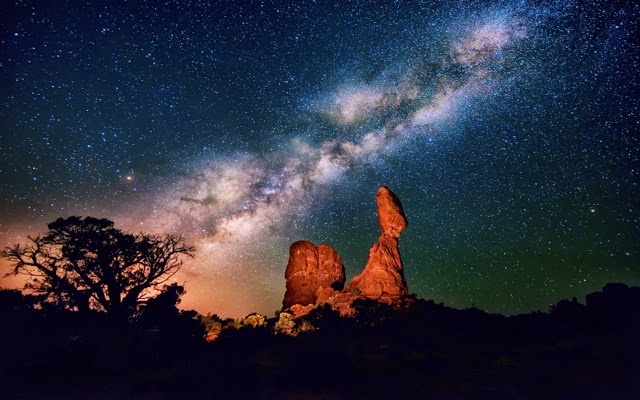
Showing posts with label universe. Show all posts

Monday, April 6, 2026

The World — XXI

Because the world is round, it turns me on
Because the world is round

Because the wind is high, it blows my mind
Because the wind is high

Love is old, love is new
Love is all, love is you

Because the sky is blue, it makes me cry
Because the sky is blue     
Because, The Beetles (1969)

With trump XXI, The World, we arrive at the completion of the cycle, and what better way to complete a cycle than with something circular or whirled/whorled as is our world!

Shadowscapes Tarot, by Stephanie Pui-Mun Law

 ". . . When one's goals have been reached, it is a wondrous and precious moment to see your dreams come true and know that elusively mythical treasure promised in fairy tales: the heart's desire."

The world is our universe and our universe is our world. It is our portion, enclosure, covering. Like the ancient Egyptian goddess Nut portrayed as a a star covered woman arching over over the sky(pt in ancient Egyptian), 

1
Nut, Tomb of Ramses IV, Valley of the Kings

whose name(the phonetic portion) was written with a nw/nu "pot" hieroglyph and also contained the pt "sky" hieroglyph as a determinative[not spoken🤫].


Nut - nw/nu "pot" +  "bread bun"(feminine) + pt "sky"[det.] 

So, visually her name is the [female] container of the sky.

Nu-"et" came out of Nu. 

In the beginning the universe only consisted of a great chaotic cosmic ocean, and the ocean itself was referred to as [*Nu]Nun. Nun, Creation Myth, wikipedia. 

Nun was the great none or nothing, the Nu-thing from which EVERYTHING arose. Nun's name was written with three nw "pot" + three n "wavy lines/water ripples"  pt "sky" [also as a determinative].


 [3] nw/nu "pot" + [3] n "wavy lines/water ripples"  pt "sky" [det.]+ seated god [det.]

So his name seems to visually represents the many/plural waters of the sky/heaven, while Nut is visually the single pot of the pet "sky".

Nut/nwt/Nuit is our pot/portion which arose out of Nun, namely, our visible or known universe

Here in the Crawley deck trump XXI is named The Universe. The figure in the middle and the snake are enclosed/ in utero/ in the belly of the starry sky[∴ Nut, aka, Nuit, who is apparent at night]. The starry sky is not merely a circle or a band, after all, but rather, is all encompassing or spherical like a pot[nw]. . . in a nut shell, like Nwt[aka, Nut/Nuit]. 

The Universe  [in a Nut] The Book of Thoth
Essential questions. Synthesis. Delay. Completion. Opposition. Inertia. Perseverence. Patience. Crystalized thinking. — Instructions for Alister Crowley's Thoth Tarot Deck, written by James Wasserman

The universe is the unus "one"+ versus "turned" or "turned into one," therefore the universus "whole, entire, all things" which is our place or physical enclosure in the sea of eternity[Nun]. 

If Judgment was a revealing, exposing, dis-clothing. The World is clothing, covering, wrapping [The World wraps up the fool's journey by wrapping things up]. The opposite of being naked or exposed is to be dressed which is to be covered. In the coffin above Nut is literally a three dimensional covering/enclosure for the body of the deceased.

In Latin mundus has the meaning "universe, world," however, mundus was also used to describe a woman's "ornaments, dress"[like Nut's star covered body], so things that cover but also have intentional arrangement. Adornments/Ornaments make a thing look put together, that is ordered(from Latin onare "equip, adorn"), equipped(Old Norse skipa "arrange, place in order"), ship-shape, which in Greek would be kosmos "orderly arrangement, i.e. decoration; the world," from which we get cosmos the Latinized version in English. 

Tarot de Marseilles 
[A woman enclosed/enclothed by a wreath and wrapped in a wrap, looking like an ornament]
"Attainment, completion, perfection, ultimate change, the end result of all efforts, success, assurance, synthesis, accomplishment, capability, the rewards that come from hard work, the path of liberation, eternal life."

Another primordial ancient Egyptian goddess like the cosmic Nut(our starry dressing/mundus), whose name is similar sounding to mundus/le monde, is Mut/Maut/Mout. 

Mut was considered a primal deity, associated with the primordial waters of Nu from which everything in the world was born. Mut, wikipedia

Her name had the meaning "mother," so Mut, Mother[Mut-er], was the Mater (L.)"origin, source, mother" of matter and the primordial mound of le monde, the world

To have things ornamented is to have them arranged or ordered which is to have things organized or have things in hand. And in Middle English mounde was "the hand ✋; protection, guardianship, power," from Old English mund, however in Old English mounde meant "the world." So, hand(mounde) and the world(mounde) are connected via the idea of protection or covering . He's got the whole world in his hands, or the whole mounde in his moundes. . . or the whole handiwork in his hands. Which would be the whole mound in his mounds 🤲, 

Print T-shirt from Target, Modern Lux,  photo by Julie O.

and a mound is a moat(in its original sense), from mote c. 1300  "a mound, a hill," from Medieval Latin mota "mound, fortified height," said to be "perhaps from Gaulish mutt, mutta," which is similar sounding to the divine mother(Mut).

The Mut Temple Complex had a kind of moat around the temple itself which sat on a mote "mound," and moats are also a form of mounde "protection" whether they are mounds(protection by height) or moats(protection by water). Very handy!

Precinct of Mut / Ruins of the Mut Temple Complex[from Ancient Thebes], Luxor, East Bank of the Nile South Karnak

At the macroscopic level the world(which is itself just a mote in the vastness of space/infinity) is our womb/enclosure/place of protection[mounde] therefore our mut "mother." At the microcosmic level, when we are in the womb, our mother[mutis our world[mounde]. 

A Mother Wombing, photo credit Julie O., May 18, 2012

In Hebrew a word meaning "womb" is rechemalso translated in the King James Bible as matrix(from Latin meaning "womb, uterus," from mãter, mãtris "[of the] mother"),  from racham (racham/rechem) "compasion, love, mercy," which is also the name for a kind of vulture, racham.

In ancient Egypt the vulture hieroglyph  represented the phonogram(i.e. word forming sound) for mut/mwt  meaning "mother," and it was also used as a phonogram for neret/nrt meaning "griffon vulture."

Mut (goddess) hieroglyph, Vulture with Nekhakha "flail"[aka, a claw/rake]

So, the vulture hieroglyph had the meaning mut "mother" and Mut was represented by the vulture. She was also called "Mut the great, mistress of Isheru," the isheru meaning "lake"[i.e., the "moat" at the temple complex] being a representation in the microcosm of the "waters above," namely, of the sky/heaven(pt), which we could say is our womb/mother. Therefore the vulture had correspondence in ancient Hebrew and ancient Egyptian with the concepts of womb, compassion, mother, protection and world/universe.

Vultures were thought of as being good and protective mothers to their young, i.e. nurturing (nrt-ing/vulturing), and their large outstretched wings were a sign of protection[mounde]. Vultures had very positive symbolic significance in ancient Egypt, like this rachaph "hovering" racham "vulture" below 👇. And to hover is to "move gently"[rachaph] like a "brooding"[rachaph] mother bird, or move gently as the rocking of a baby in the rechem "womb."

Nekhbet, Tutelary Goddess of Upper Egypt, Deir el-Bahari temple, Thebes, Egypt
Carrying a shen("encircling," symbolizing eternal protection) in her talons 
The earth was without form and void, and darkness was over the face of the deep. And the Spirit[ruach] of God[elohim]was hovering[rachaph] over the face of the waters. Gen. 1:2 ESV

So, the "Spirit of God" was hovering / covering / wombing / momming / incubating / mounde-ing. . . moving gently/rocking. . . perhaps we could say, whirring / purring / humming / thrumming / vibrating(as wings do, think of hummingbirds), or idling. . .  but not idle. A LOT is going on in an egg or a womb even though what  is going on is hidden.  Just as a bird that is hovering in the sky is actually exerting a lot of controlled force and effort to remain balanced and aloft, yet appears motionless, or an idling engine appears to be idle, yet is full of potential power just waiting for the command/word that will set it loose. . . run! 

And God said, "let there be light," and there was light. Gen. 1:3

Likewise, there is a lot going on in a brain even though it has a lot "covering/wrapping/veil" over it. We can't see the workings of the mind until a person acts in some way. But if a brain has a good womb/mother/mounde/world/protection it has a good chance of developing well and being capable of acting/doing well.

Here is a vulture headdress/crown which is a bejeweled kind of covering[lot] that is cast/wrapped[lut] over a woman's head and is a part of a woman's mundus "dress" and is very adorned[mundus] and elegant[mundus]. It is a lot. 

Ptolemaic Period, c. 100—1 B.C., Denera, Egypt, Egypt Museum

It is depicted upon the crowns of goddesses associated with the vulture, such as Mut and Nekhbet ["{she} of Nekheb", (the city later called after the Greek equivalent, Eileiythia, goddess of childbirth). Nekhbet was another early predynastic creator goddess symbolizing protection and motherhood], and the crown was later worn by royalty and priestesses. 

Nefertari Meritmut, wife of Ramses II, Ninteenth Dynasty, c. 1255 BCE, Valley of the Queens, Luxor

In a certain sense, the whole world and universe is contained in one head/mound inside one mind[from PIE root *men(1) "to think"] of one/each man, therefore we could say that the vulture crown is an image of divine order and protection of the created universe.

This image of the vulture as a divine protector is similar to the Christian portrayal of the Holy Spirit as an alighting dove.


Or of the action of God in the Old Testament related to a nesher "large bird of prey; griffon vultureeagle," in the Old Testament.
'You yourselves have seen what I did to the Egyptians, and how I bore you on eagles'[nesherim] wings and brought you to myself. Ex. 19:4

Sometimes nesher is translated as "eagle" while at other times it is translated as "vulture"The Biblical Greek, aetos "eagle" is used to translate the Hebrew word, nesher, and so aetos is also translated to English at times as either "eagle" or "vulture."

The first living creature was like a lion, the second was like an ox, the third had a face like a man, the fourth was like a flying eagle[aeto]Rev. 4:7 NIV

compare to Hebrew:

Their faces looked like this: Each of the four had the face of a human being, and on the right side of each had the face of a lion, and on the left the face of an ox; each also had the face of an eagle[nesher]. Ez. 1:10 NIV

The Universal Waite Tarot
The four living creatures are portrayed in the corners of the card

We also see this ambiguity in translation through the origins of the name of the bright star Vega. Vega is taken from a shortening of the Arabic an-nasr al-wāqi' commonly translated as the "falling/descending/swooping eagle," however, the word nasr, similar to the Hebrew nesher, can also be translated as vulture.

The bright star Vega has a name that is well-known around the world, but whose meaning continues to be misunderstood. Typically presented as the "Diving Eagle", the original Arabic name for Vega — an-nasr al-wāqi' —  is best represented as the "Alighting Vulture". Together with its partner, Altair— the Flying Vulture—these two stars were well-known to Arabian astronomy as the Two Vultures, a star name that was in use by the early 6th century CE.  From Diving Eagle to Alighting Vulture: The Origin of Vega in Arabian Astronomy, Danielle Adams, American Astronomical Society, 2023 
Deneb[Dhanab al-Dajājah](in Cygnus, Latin "the swan"), Vega[an-nasr al-wāqi',"the Alighting Vulture"](in Lyra), and Altair[al-nasr al tāir, "the Flying Vulture"](in Aquilla, Latin "the eagle"), the three stars known as "The Summer Triangle."  

Interestingly, this Arabic word wāqi' "falling, alighting" also carries the meaning "happening," or "occurring," as we might use the word "falling" when describing the occurrance of night "falling" or an event "falling" or "landing" on a certain day of the week. Chapter 56 of the Quran is called, Al-Wāqi-a, translated as "The Inevitable," or "The Event." In this chapter, the events following Judgment Day and the manner of resurrection and the afterlife are discussed. 

When the Inevitable Event takes place, 
then no one can deny it has come.
It will debase some and elevate others.
When the earth will be violently shaken,
and the mountains will be crushed to pieces,
becoming scattered particles of dust. . .  56. Al Waqi'ah          

If the Vulture represents a place of protection like world and womb, then the Vulture "Falling/Happening/Event," would be similar in meaning to The World XXI which carries the meaning of "attainment," "completion," "perfection," etc., which we could say is a type of birthing(womb) event, and such an event(i.e., birth), when imminent is described as a "falling, lightening, dropping," and birth is a culminating event that is both an ending/death(of pregnancy) and a new beginning(birth), and such events are not completed without a certain amount of drama and/or peril. 

Interestingly enough, on the grand timescale of history, there was such an event that occurred around the epoch when "The Falling Vulture," i.e., Vega, was slowly but steadily "falling away" from its position as the pole, after ≈ 12,000 BC[after having first risen to this prominence/star status, overtaking the previous acting pole star, Deneb, (from Arabic) Dhanab ad-Dajājah "tail of the hen," in Cygnus. Any star given the title of "Pole Star" is just playing a role for a time due to their prominence and position near [either of the the paths; north or south] of the celestial pole over the course of time it takes to complete the 25771.57 year axial procession.

Rough sketch by Julie O.,  from The Changing Pole Star, Exploring Science
The path of the North Celestial Pole [in red], NEP[North Ecliptic Pole]. The NCP was near the star Vega[the Falling Vulture/Eagle]  12,000 BC, thereafter "falling" away until the begging of the Holocene epoch  9,700 BC at which time the NCP was then near ι Herculis in the constellation of Hercules  10,000 BC.

This was the period of the Younger Dryas, a sudden cold period lasting 1200 yrs., followed by a period of rapid warming, ending the last glacial period, i.e., the last ice age, which we could say was the worlds's "water breaking," that is, the melting glaciers released/broke the world's water. And civilization was born!

Geological evidence is revealing how conditions during the Younger Dryas remodeled our planet. It created weather so extreme that it also reduced human societies [*hunter gatherers] living on the planet at this time.

Importantly, it marks the prehistory period just before human civilization arises. The Younger Dryas Event and the Prehistoric Period Extinction, by The Human Origin Project,

Following this period, was the advent of sedentary cultures in the eastern Mediterranean region(as well as other regions throughout the world) that culminated in the rise of agriculture and the emergence of the first megalithic structures(such as the temple complex at Göbekli Tepe in Anatolia, c. 9600 BC, modern day Turkey, part of the Fertile Crescent, a major cradle of civilization), at the birth/dawn of civilization [and dawn is a birth event as well; when the sun(Ra) is born anew from the sky(Nut)].

How did these people view vultures?

Generally today, eagles are given a positive roll as symbols of strength and freedom, while vultures are given a negative roll as harbingers of death and decay, however in certain cultures, and at certain times in history, such as in ancient Egypt, vultures were regarded very positively {even though the word for mother, mut, was similar to the word for death, mut; so "death" maybe containing the meaning of something like returning to the mother/womb/tomb/mound}.

After the unification of ancient Egypt the vulture (patron of Upper Egypt, Nekhbet) and the fiery serpent (patron of Lower Egypt, Wadjet) were joined as nebty, literally meaning "The Two Ladies," and were often depicted together as protectors of a unified Egypt.

The Two Ladies, Mask of Tutankhamun - Egypt Museum

If they were protectors, then they were shields or coverers[from *wer-(4) "to cover"] which as shown above, certain people would wear as coverings for the head. And a protector is a keeper or a watcher over something which we could say is a Lord[from hlaf+weardfrom *wer-(3)"perceive, watch out for"]/Lady who is a lofty/airy(air/*awer) being, which is *wer-(1) "raised lifted" wer "man"[Old English], from Latin vir/viri which is said to be the origin of our English word World, reconstructed as a Proto-Germanic compound of wer "man" + ald "age," meaning literally "the age of man." However, this etymology of "world" seems to be the word taken in a more secular "worldly" sense than that of Le Monde. Yet, men(wer) are those who *men-(1) "think," and in thinking they *men-(2) "project" themselves mentally like mountains[from men-(2)],  motes or mounds and contain the whole mundus (sometimes even making mountains out of mole hills).

Mental painting by Ailis O'Reilly 2017, ailis_art 

The "world" is the "age of the thinker(i.e., men)" or we could say, the "age of the story teller." 

We are the music makers,
    And we are the dreamers of dreams,
Wandering by lone sea-breakers,
    And sitting by desolate streams; —
World-losers and world-forsakers,
    On whom the pale moon gleams:
Yet we are the movers and shakers
    Of the world for ever, it seems.

With wonderful deathless ditties
We build up the world's great cities,
    And out of a fabulous story
    We fashion an empire's glory:
One man with a dream, at pleasure,
    Shall go forth and conquer a crown;
And three with a new song's measure
    Can trample a kingdom down . . . 

 Ode — stanzas 1 & 2, by Arthur O'Shaunghnessey, The Poetry Foundation

An ald "age" is a period of time or period of history, so we could say that the world(wer+ald) is a tale/telling or a spell(from Old English spell "story, saying, tale; history, narrative, fable; discourse, command") of wer "man." Or is it a spell put over man? Or perhaps is it both at the same time? Our thoughts create our reality both individually and collectively and we inherit or are born into a world(story) of sin(i.e., the esse "being"ness or essentia "beingness" we experience which involves the experience of both good and evil). The world is our reality(realis) or the res "things" that are or have come to life through our thought. The spell is cast[lut] which creates a casting or veil[lot]. But perhaps we could call this state of things[i.e., the world of sin and death] a false mother/world/matrix. This story/world of sin and death is not our true mother, just like the woman in the Bible who did not protect 🤲 the living baby was not his mother.

The woman whose son was alive was deeply moved out of love for her son and said to the king, "Please, my lord, give her the living baby! Don't kill him!" But the other said, "Neither I nor you shall have him. Cut him in two! Then the king gave his ruling: "Give the living baby to the first woman. Do not kill him; she is his mother." 1 Kings 3:25-26

In reality, the world, our (true) mother, who covers us(wombs us), is a story that protects us. The world gives us a place in the vastness of eternity(which is Nu-thing/Nun). We need to have a point. . . and point of origin. The point 👉, the YOU ARE HERE on the map, is our anchor ⚓︎, and is life giving, an ankh-er ☥. Nothing comes from nothing, so we are the newthing(creation) from the knowthing 🧠 that came out of the Nuthing or Nun. Our world gives us space ✨ to exist, to grow, to evolve, to become more. . . As the world turns. Which brings us back again to The Fool

And a one, a two, a one, two, three, four!

Shaddowscapes Tarot, by Stephanie Pui-Mun Law

Saturday, May 10, 2014

You're My Everything

   eXtreme Deep Field, 10 yrs. of NASA Hubble Spactelescope photographs from a patch of sky at the center of the origional Hubble Ultra Deep Field(an area about 1/10 the angular diameter of the moon as viewed from Earth), released Sept. 25, 2012 

Our visible universe is a sphere with a diameter of approximately 92 billion light years. Just that part, what is visible, is awesomely huge. Because of the enormity of this space it is easy to snuggle down in the middle and not have to think about the nature of the reality we are a part of. Regardless of how unfathomably gigantic the universe is, the question remains, "What is just beyond the edge of the universe? What happens at the end?"

   Truman Show, 1998, Truman at the Edge of his World

Wouldn't there have to be a boundary? How could it be possible for the physical universe to be infinite? Is there a wall there? Is the universe an enormous dome? an egg? or a torus? What if you got to the edge and you found a stairway that led to a door? What would be on the other side of that door? It is easy to get caught up in the distractions of everyday life and not conscider the ultimate questions. Contemplating the boundaries of space is like contemplating death. Someday you will die, but it's not now… it is in the enigmatic future. Someday you will reach the edge of the universe as well, if you travel there in your mind, and you will have to walk up those stairs and see what is on the other side of that door… and there is no turning back.

     Flammarion Wood Engraving, artist unknown, first published 1888

Universal is from Latin universalis "of or belonging to all," from universus "all together, whole, entire." The noun usage universum "all things, everybody, all people, the whole world" is where we get the word universe, it is from unus "one" + versum "turned", said to be, literally "turned into one."  This explanation, however, is a bit perplexing. We say that the universe is everything there is. It is all space and matter(at least on this plane of reality) existing as a whole. And the sense of being universal is to be one. So where does this notion of turning fit into the word? In other words why did the Latin universum come to mean "all things, everybody, all people, the whole world" in the first place? Why not just uni-totum "all one" or something like that?

We might think universe to be more like one + verse, "verse" as in, "writing arranged in a a rhythmic pattern." The Word was spoken and the universe came into being along with its order and laws of nature. Not only does versus in Latin have the meaning of "turn toward or against," a form of vertere "to turn, turn back, be turned, convert, transform, translate, be changed", from PIE *wer-(2) "to turn, bend," versus also has the meaning of "a turn of the plow, a line, row, line of verse" as a noun. So couldn't we say the universe is the one verse? Maybe the hymn of the creator? But what does this "verse" have to do with turning either? A verse is a row of poetry, like a plowed line in a field. The soil is turned and it is then ready to take seed and produce growth. The thing about verse is that it seeks to produce more than what is simply written down. It is meant to be fertile ground for the reader or hearer of the poetry to grow the fruit of emotion and experience which the writer of the verse hopes to share.


    A Child's Garden of Verses, by Robert Louis Stevenson 1969 edition

When I was sick and lay a-bed,
I had two pillows at my head,
And all my toys beside me lay,
To keep me happy all the day.

And sometimes for an hour or so
I watched my leaden soldiers go,
With different uniforms and drills,
Among the bed-clothes, through the hills;

And sometimes sent my ships in fleets
All up and down among the sheets;
Or brought my trees and houses out,
And planted cities all about.

I was the giant great and still
That sits upon the pillow-hill,
And sees before him, dale and plain,
The pleasant land of counterpane.


This word "verse" is connected to words for growth, as in, anniversary which has the meaning of an annual return, the literal spinning/turning of a cycle, and birthdays(a year of growth). Vertex and vertical are from vertere as wellProduce is grown in rows(verses), their growth is often vertical and they are green, or vert / verte in French. Vert is Old French "foliage, greenery," from Latin viridis. Spring, the time of spiraling growth, begins at the time of the vernal equinox. So the turning has to do with cycles and growth. But what of the meaning "versus", as in us vs. them? And the word advert "turn away"? In Latin versus has the meaning of "turn toward or against." 

When the ground is turned isn't it a violence to the ground? However, this adversity is what makes it fertile. Turning is change and change can be perceived as good or bad, i.e. as a growth upward like a plant, or an encounter with a foe which can create heroes, or victors in a match. Often it is the opponent who motivates a person to grow their talents and get better.

    David and Goliath, Edgar Degas, c. 1863, Fitzwilliam Museum, University of Cambridge, UK

This brings us back to the "turned"(versum) in universe. What was the ancient notion of this one(unum) thing which they saw as the dome of the night sky? Everything in the heavens appeared as if it were revolving around them. 

Turning has the sense of creating, as in the turning of clay upon the potters wheel to make a pot(which is green until it is fired). Pushing against the clay, i.e., hand vs. clay, on the lathe causes the growth of the pot. Maybe the universe was thought to be one thing, as in one fashioned thing, like a pot that is turned on a wheel. When the clay is being turned(being formed on a wheel) and thus turned into a pot, it grows up vertically and out with the motion. Maybe the universe is "one  turned" in this sense, it is one vessel or pot, we might say a uni-vas/vassa "container, vessel".

The Uni-vase 


Here is a depiction of the ancient Egyptian gods(neteru) IsisNut and Nun from the Valley of the Kings. Above the heads of the gods are their hieroglyphic representations / names. 

    Isis, Nut, and Nun from the House of Eternity, Valley of the Kings, reign of Seti I- Ramses II, 1290-1213 BC

The first on the crown of Isis(iSt) is st  meaning "seat, throne, place, abode, tomb, room." On the head of Nut is a nu "pot" with "bread loaf"(feminine gender indication) and the platform indicating pt "sky". So Nut is nu + t + pt(not pronounced in her name), nevertheless this would make her Nut, Pot (of the sky) visually, and she is in fact the womb or vessel(pot) from which Ra, the sun, was reborn each morning from the platform of the pt "sky." The last figure is Nun/Nu, his hieroglyph is three nu's "pots" on a pt. The tripling is meant to indicate many, and nu was "pot", as in, a container of the waters. His name sometimes has the hieroglyph for "waters" with it as well which is also made of a triplet of three horizontal wavy lines(the wavy line "water" indicating the letter "N" in hieroglyphs as well). 

"Nun" = nu nu nu + [ pt + n n n

So he is the many waters, Nu nu nu. Maybe even the big no no no, being too big to contemplate.

Nu / Nun was the ancient Egyptian god/concept of the primordial waters or abyss from which the first land appeared. Nun was what continued outside of the bounds of the created universe, but was also present in the water upon the Earth. Nun is sometimes depicted as a frog or a man with a frog head, as one of the Ogdoad ("the Eightfold" Gk.) of Khmun(Hermopolis), four male gods(depicted as frogs during the Late Kingdom) and four female gods(depicted as snakes), Nu and Nunet(the primordial waters), Amun and Amunet(air or invisibility, hidden one), Kek and Kekut(darkness [the primordial darkness/chaos, also related to transitions between light and dark, called "bringer-in-of-the-light"), and Ḥeḥ and Hehet(infinite space, infinity, eternity. These were the forces from which creation arose.

The sun rises from the mound of creation at the beginning of time. The central circle represents the mound, and the three orange circles are the sun(ra') at different stages of its rising. At the top is the "horizon" hieroglyph with the sun appearing atop it. At either side are the goddesses of the north(Neith?, right) and south(Anuket?, left), pouring out the waters that surround the mound. The eight stick figures are the gods of the Ogdoad, hoeing the soil(turning verses). - 21st Dynasty, c.1075-945 BC, from the Book of the Dead Khensumose 
In the beginning neteru created the heavens and the earth. Ḥeḥ was without form and void, and Kek was upon the face of NunAmun was moving over the face of Nun. 
And Seker cried out, "ḥ'r wr!(Horus the Great [Light])"; and there was the first great light of dawn. 
Genesis 1:1-3 [my own trans-concept translation] - the first day / revolution / turn
Turn is from Old English turnian "to rotate revolve," also Old French torner "turn away or around; transform, change; turn on a lathe, both from Latin tornare "polish, round, turn on a lathe," from tornus "lathe", Greek tornos "lathe". When certain matter is turned it is made into something through revolution and applied pressure. 

Nun was sometimes combined with the god Ptah whose name means "create", patron of craftsman, as Ptah-Nun, father of the sun god Atum Ra. In this passage, the heavens, i.e., the dome of the universe, is described as Ptah's potter's wheel, i.e., his turn(versus) table, or tornos.
The Potter's wheel is the wheel of the revolving heavens; and Ptah is addressed in a form which agrees very well with the idea that the perpetual gyration of the wheel generates all things: "O God, Architect of the World, thou art without mother, being born through repetition of thyself." -Creation Records Discovered in Egypt [Studies in the Book of the Dead], by George St. Clair, 1898, ch. VIII, pg. 116
The one-versum(turned), i.e., universe seems to be Nut, the one pot(nu) of water, or womb which turns about the heavens, the space of creation, from out of Nun, and it was believed that one day creation would return back to Nun, the watery chaos.

Back to none?

None is from Old English nan "not one, not any," from ne "not"+ an "one", analogous to Latin non "not, by no means, not at all, not a", from Old Latin noenum "not one".

So maybe we could call Nun, Mr. "no one", or Mr. Nobody. But Nobody is not necessarlily inconsequential, as the Cyclops, Polyphemus, can attest to.  

    Odysseus Blinding Polyphemus, Italian, early 16th century
Then in his turn from out the cave big Polyphemus answered: Friends, Nobody is murdering me by craft. Force there is none. But answering him in winged words they said: If nobody harms you when you are left alone, illness which comes from mighty Zeus you cannot fly. But make your prayer to your father, Lord Poseidon. OdysseyBook 9, ln. 455
Odysseus, passing himself off as Nobody, put out the eye of the cyclops "circle-eyed" and escapes imprisonment in the cave with his remaining men. Put is from Old English related to pytan "put out, thrust out," from a Germanic stem(related to Old Norse pota "to poke"). Pytan "put out," is perhaps like Ptah-ing[like a potter]. When a potter creates a pot[a pota, a thing poked?] he does poke and push out the clay. Ptah is the potter or poker of the pt "sky".

Poseidon, the father of Polyphemus, is god of the sea, not unlike Nun, therefore, watery and enigmatic, a Mr. Nobody, known as "Earth-shaker". Poseidon is from Poseidaon/Poseidewanos in Mycenaean, and in Aeolic is Potaidaon, Doric Poteidon/Poteidaon/Poteidas, said to be perhaps from PIE *potis "husband, lord". The second element is debated as to whether or not it is related to the word for "earth" da in Doric, from of ge(meaning "earth" as in Gaia), or from Doric dawon "water", as in either "Husband/Lord of the Earth" or "Lord of the Water". This combination of earth and water is a bit like the combination of the two Egyptians gods Ptah and Nun. Perhaps there is a bit of truth in both. Ptah-Nun/Potaidaon the divine potter of the waters of the universe.
[This is also in concept like the Sumerian god called Enki "Lord of Earth" / in Akkadian called, Ea "House of Water," god of crafts, fresh water, seawater, wisdom. As opposed to the a Sumerian, Enlil "Lord of Wind"(like the Egyptian Amun), and the Sumerian, An "sky", like the Greek Uranus/Ouranus, personification of the sky.]


   Horses of NeptuneWalter Crane, 1893

Poseidon was also known as Poseidon Hippiosthe god of horses. As a horse he pursued Demeter Δημήτηρ / Damater [Doric] Δαμάτηρ (possibly from da "earth"+ metēr "mother"). She turned herself into a mare and tried to conceal herself in a heard of horses, however, Poseidon turned into a stallion and raped her. Demeter bore Desponia ("Lady / Mistress of the House") and the swift immortal horse Arion.

Neptune is the Roman counterpart of Poseidon. Neptune is said to be probably from PIE *nebh- "cloud", related to Latin nebula "mist, vapor, fog, smoke," Greek nephele, nephos "cloud." Neptune was also associate with horses under the name of Neptunus Equester.


    Horsehead Nebula, DownUnder Observatory, Freemont, MI., by Terry Hankock

So Neptune is the nebh "cloud/mist of heaven"+ tune. The "tune" of the nebula forms stars and produces the music of the spheres. Tune is a variant of "tone", from Latin tonus "a sound, tone, acent", literally stretching, as in stretching, tightening, making a string taught, related to teinein "to stretch". When the right tuning occurs, solar systems and worlds are formed. So maybe it is not a stretch to connect this teinein with the Egyptian god Ta-tenen "risen land", the primordial mound, the rock(petros), that "streached" out of Nun. Ta-Tanen is combined with Ptah(Pee-tah/"Peter") in the Old Kingdom(c.2649-2150 BC) as Ptah-Tatenen. So if we substitute this Ptah "create" for tune, this would make Neptah out of Neptune. 

In Norse mythology the spring Hvergelmir "roaring kettle / bubbling boiling spring" is the source of the eleven rivers and was the origin of the causes of creation. 
This seems to be similar in concept to Nun(primordial waters of the universe). Its forces flowed south from Niflheim (from nifil "mist," cognate with Gk. nephele "cloud" heim "home", similar to the abode of Neptune and Poseidon) to Ginnungagap "mighty gap" called the Yawning Void. Ginnungagap was the vast primordial void prior to the creation of the manifest universe. Ymir, the first proto-giant came to be from the interaction between the nebulous realm of primordial cold, ice, and fog to the North, Niflheim, and the realm of fire to the South, Muspellheim, in this mighty gap. 

Audhumla, the gigantic cow, uncovered the first man, Buri, in this void by licking the salty stones around Ginnungagap. Ymir was nourished by Audhumla, and in the Poetic Edda it states that the world was eventually made from the body of Ymir. 
From Ymer's flesh, in the dawning of time, was made
The earth, and from his blood the raging sea,
The rocks from his bones, and from his hair 
the trees, and plants; his skull became the vaulted heaven;
And Midgard, from his fringed lids, the gods
Kindly have fashioned for the sons of men;
And from his brain, the clouds that dress the sky
Of Summer, or dart their lightnings in the storm,
Their first substance had. - The Song of Grimner, C.P. 1851

    18th Century Icelandic Manuscript, Danish Royal Library- Adhumla licks the salty stones around Ginnungagap and Buri emerges.

Nut is also sometimes portrayed as a great cow of the sky, as well as in her other forms(a sycamore tree, starry sky lady, sow). Hathor was commonly portrayed in the form of a cow. Nut and Hathor personified the appearance of the Milky Way in ancient Egypt.  
She[Hathor] was originally a personification of the Milky Way, which was considered to be the milk that flowed from the udders of a heavenly cow (linking her with Nut, Bat and Mehet-Weret). Hathor, Ancient Egypt Online
Nut, Nwt means "[night]sky" and Hathor, wt hr, "House of Horus"(the abode of the ḥr.w "sky"; "one who is above / Falcon" god, Horus). So they are similar aspects of the same archetype.

This gives some context to the term, galaxy, which is from Late Latin galaxias "Milky Way," from Greek galaxies kiklos "milky circle", from gala(galaktos genitive) "milk". 


    The Milky Way, from The Center for Planetary Science, Photo from NGC.

Cosmos is the Latinized form of the Greek kosmos meaning "order, good order, orderly arrangement." Pythagoras was first to use it for "the universe." Kosmos does have a secondary meaning of "ornaments on a woman's dress, decoration" like the starry mantle of Nut perhaps. We might say someone is "put together," kosmos, when they dress in a fine clothes and have their hair done(kosmokomes "dressing the hair") and all is in good order and neat arrangement.

    Our Lady of Guadalupe looking stellar in her Cosmic Cloak, 1531

Kosmein had the meaning "to dispose, prepare", especially with the meaning of "order and arrange(troops for battle), to set (an army) in array". God is one who orders(kosmein) the CosmosThey are not a random bunch of gasses and rocks strewn around the universe. 
Lift up your eyes on high and see: who created these? He who brings out their host(army) by number; calling them all by name; by the greatness of his might, and because he is strong in power not one is missing. Isaiah 40:26
Why would one be "missing" unless they were in a particular order for a particular purpose? And why would the stars be named unless they had a particular purpose and nature?

The saying, "You look stellar," takes on new meaning. The universe is cosmic. Like the most intricate amazing arrangement to produce life and variety while still being ordered to a good end.


    A Cosmic Looking Image of a Border Feature Inside the Mandelbrot Set, by Binette228, Wikimedia

We imagine that here on Earth we stand on solid ground and the great oceans are supported by the land. And so it is the case in a sense. But actually our precious Earth is just a giant starship in the fathomless ocean of space. The vastness of space, time and existence can be scary to contemplate. We might feel as if we will get lost or swallowed up. However, we can take comfort in the fact that no matter how far we travel either in or out, the cosmos is well ordered and we will be at home in it. Let's not be afraid to explore. Engage!


You're Everything.